
Google is an Online Advertising Monopoly, Judge Rules
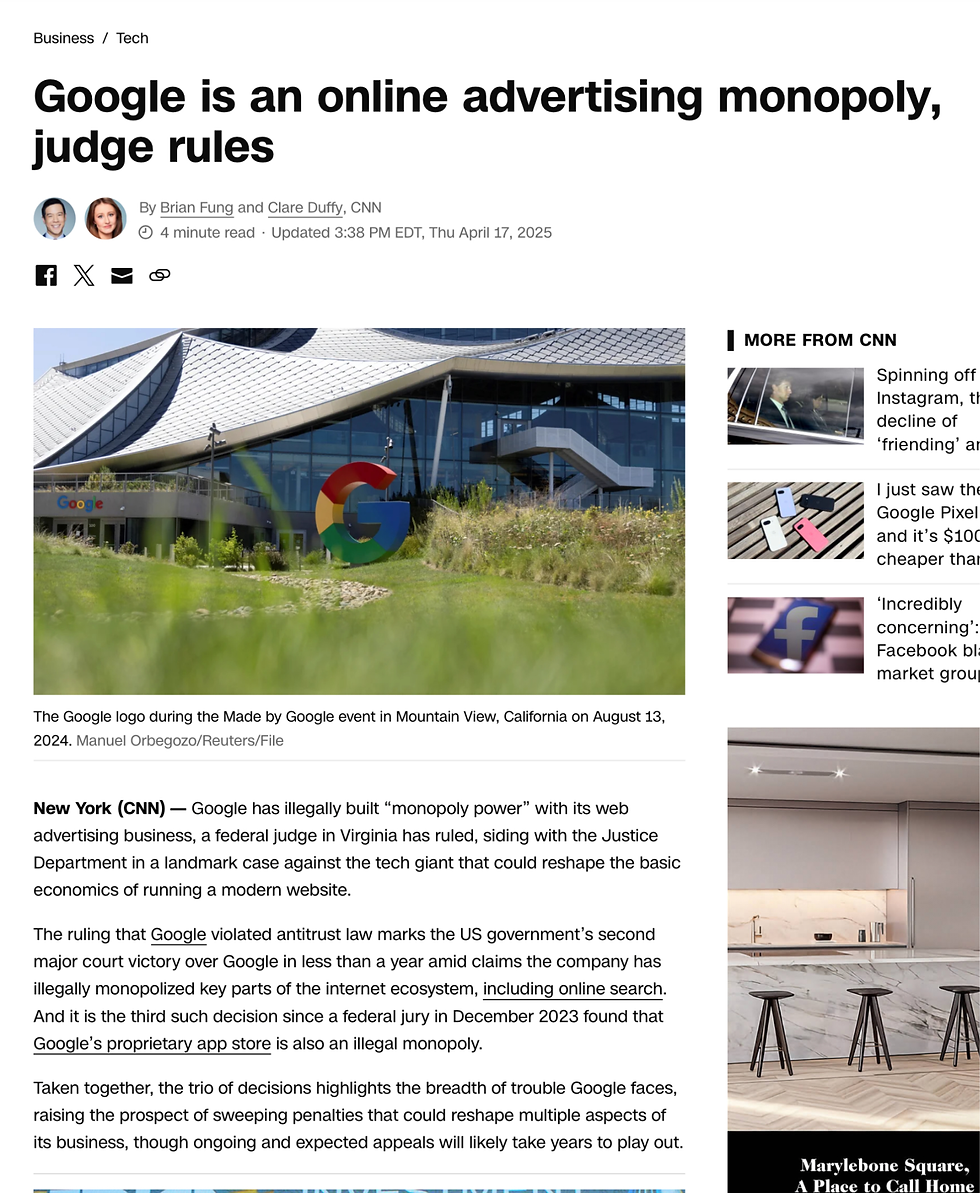
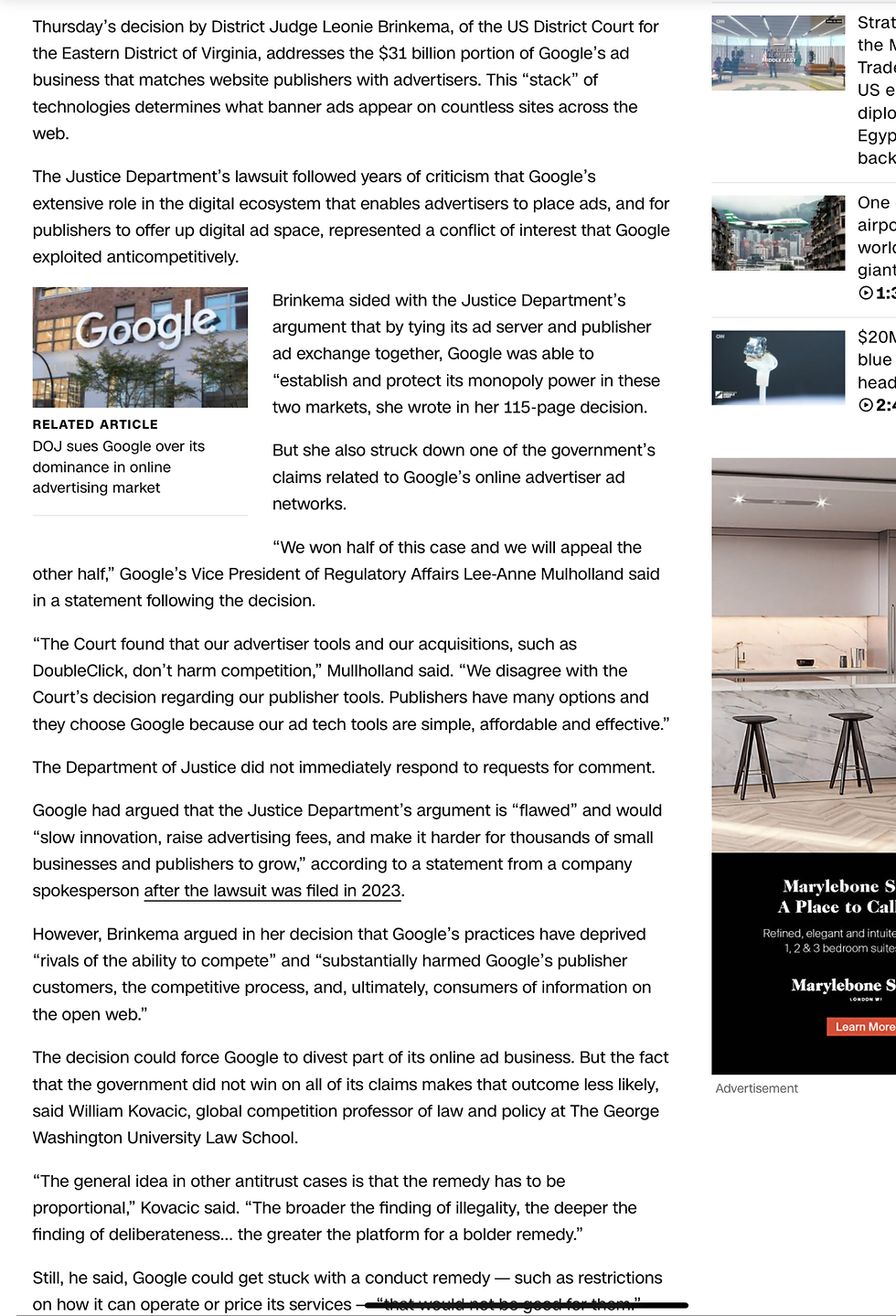
Google is one of the biggest search engines in the market in 2025, but is it really racing in an oligopoly, or did it illegally become a monopoly? A federal Judge from Virginia has concluded that Google illegally crossed antitrust laws of the US and monopolized critical points of the internet, such as ads and search engines. The news article “Google is an online advertising monopoly, judge rules” discusses the argument and mentions Google’s power on the online platforms. An oligopoly is a type of market structure in which a small number of firms control the market, none of the firms can get in the way of another on the way to have market power. However a monopoly is when a single seller or producer holds the dominant position in an industry or a sector. For the case this article talks about, the online advertising market initially appears to operate as an oligopoly with a few known players—like Amazon, Meta and Google. However, the court suggests that Google used its dominant position to eliminate the desired competition, effectively transforming its role into a monopoly. This behavior created high barriers to entry , discouraging new firms from entering the market and therefore weakening the competitive environment. Google’s integration between its ad servers and exchange allowed it to control both supply and demand sides of digital ads, giving it the chance to set higher prices — an expected outcome in monopolistic markets where firms become full price makers and face inelastic demand from advertisers.

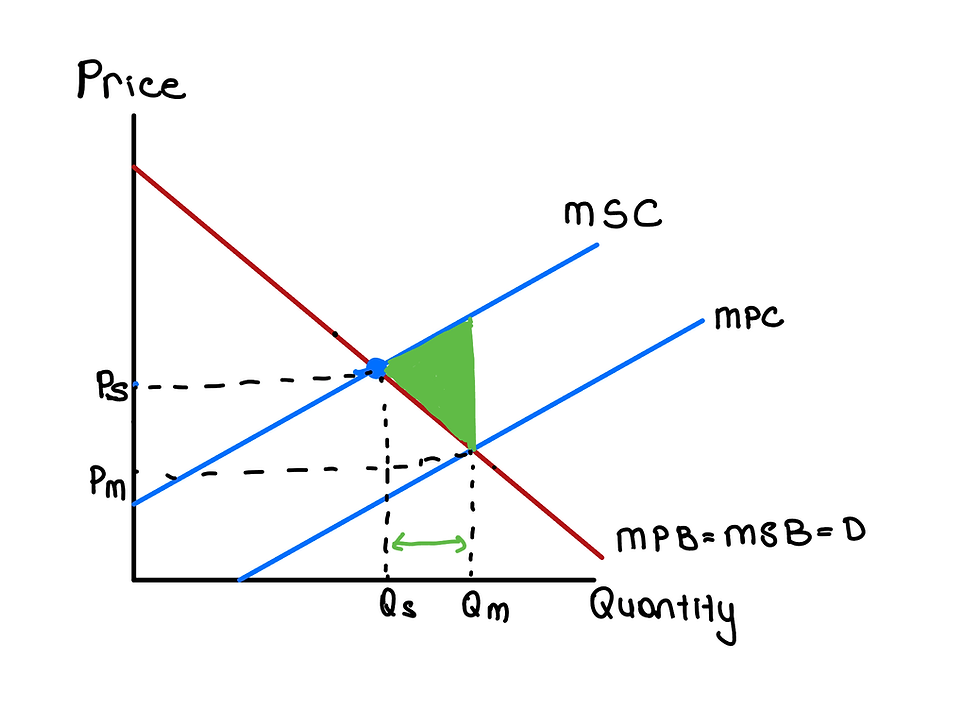
Google, acting as the dominant firm, produces at quantity Qı and charges price Pı, where MR = MC. This price is above the competitive market price, and output is below the allocatively efficient level. In such a situation, the firm–Google– behaves in a way that results in allocative inefficiency, meaning the resources are not distributed in a way that maximizes total social welfare. The area in red is the proof of a welfare loss for a monopolistic firm. All these increase the profit for Google while harming all other sides in the market because it means neither consumer nor the producer surplus is maximized, as a part of the total surplus is given to welfare loss In this scenario, advertisers may pay higher prices, publishers may earn less revenue, and consumers may experience a decrease in quality or diversity of content, all indicators of a market failure . Antitrust laws are laws set in place to regulate market power of monopolies, by the government. Google disobeys these laws to increase its profits, as it is claimed by the judges. Since falsely allocated use of resources in the market, especially for such a popular sector related to the internet, would cause significant harm to society, antitrust laws must be carefully applied to regulate the profits made by monopoly and fix the price and quantity in the system. The best usage of sources would be at socially optimal equilibrium point, in other words where allocatively efficiency is set.

The best example for such a situation could be a perfectly competitive market. As shown in the graph above, whether the firm produces positive or negative economic profit, the profit would turn into normal profit , 0, in the long run. At this eqillbirium ATC, MC, and Demand must be intersecting at Pc and Qc. For such firms, the market would be producing in productively and socially efficient quantities, where market and firm equilibrium prices are identical. But the problem is it is not possible to turn a monopoly into a perfectly competitive market due to the high barriers to entry and product differentiation. Still, the best way possible to fix the market failure would be to increase competition and turn the market back into an oligopoly. If Google continues to set the prices it desires, then the only efficiency obtained would be profit maximization. If the services are dependent on Google, then differentiation would erode over time, and consumers who are not glad with the service Google provides would have to stop using technology, which is an unsustainable outcome in a digital society. While the online advertising market may have started as an oligopoly, Google’s actions shifted the balance and created a monopoly that harms advertisers, publishers, and consumers alike. By controlling both sides of the advertising exchange, Google is disruping allocative efficiency and violating antitrust laws designed to protect market competition. Although turning a monopoly into a perfectly competitive market is unlikely, enforcing regulations to encourage competition can help restore balance. To protect innovative services, consumer choice, and market fairness, it is crucial that dominant tech firms are prevented from exploiting their power, legally or illegally.

Citation
Investopedia. “Oligopoly: Meaning and Characteristics in a Market.” Investopedia, 15 Apr. 2024, www.investopedia.com/terms/o/oligopoly.asp .
Investopedia. “What Is a Monopoly? Types, Regulations, and Impact on Markets.” Investopedia, 21 June 2024, www.investopedia.com/terms/m/monopoly.asp .
Fung, Brian, and Clare Duffy. “Google Is an Online Advertising Monopoly, Judge Rules.” CNN, 17 Apr. 2025, edition.cnn.com/2025/04/17/tech/google-adtech-trial-decision/index.html . Accessed 20 Apr. 2025.


Yorumlar